Friday, January 24, 2014

Yintang - Acupuncture Point

I learnt from this article that yintang is "a single point located between the eyebrows, just below the area known as the third eye", and it is used in acupuncture to calm the mind and "for anything head and face-related, especially issues with the nose".

I also learnt from this article that we can apply self-acupressure on the yintang. 
 http://taoism.about.com/od/Acupressure_Treasures/a/Yin-Tang.htm
"To apply acupressure to Yin Tang, bring the first and middle fingers of your two hands together, using the ends of those four fingers, in concert, to very gently, in a circular motion, massage the area between the inner ends of your two eyebrows. The motion can be either clockwise or counter-clockwise (find out which intuitively feels best to you). As you apply that circular acupressure/massage, allow all the muscles of your forehead to soften and relax (saying "ahh" can be useful here), as though they were releasing backward, in the direction of the center of your skull (the upper dantian area)."
When googling "yintang acupuncture youtube", I came across this fun and edutaining video on the extra points in acupuncture, including the yintang point.
http://www.youtube.com/watch?v=IxEPv0jEFWw

 I also find this information on this related article useful regarding how yintang or the pineal gland can be stimulated to secrete the hormone melatonin which makes us sleepy.  
http://cuppingforlife.blogspot.sg/2011/11/yintang-most-requested-acupuncture.html

"The location of this acupuncture point corresponds to the third eye, a metaphoric eye in Hinduism and Buddhism that opens as our consciousness expands and we become enlightened. It is the location of the brow chakra, the 6th of 7 major energy vortexes that exist in our bodies, which has to do with inner guidance, mental clarity, and intuition. Even in western medicine this is an anatomically important location, where light enters the skull to activate the pineal gland. As darkness increases in the evening, the pineal gland is stimulated to secrete the hormone melatonin, which makes us sleepy. As the sun comes up and light increases, the pineal gland stops producing this hormone and we wake up."
This article says that research results showed "similarities measured in the human brain both under sedation using yintang and sedation using anesthesia." 
http://healthystuffu.com/acupuncture-point-yintang-the-third-eye-6th-chakra/
"The journal Medical Acupuncture published a 2005 study entitled “Shenting and Yintang: Quantification Of Cerebral Effects Of Acupressure, Manual Acupuncture, and Laserneedle Acupuncture Using High-Tech Neuromonitoring Methods,” by Gerhard Litscher, MDsc. The study was about the electroencephalographic similarities of acupressure induced sedation and general anesthesia, as assessed by bispectral index and spectral edge frequency. Read the study here. The basic result showed similarities measured in the human brain both under sedation using yintang and sedation using anesthesia."

Sunday, January 19, 2014

Amazing Herb Kills 98% Of Cancer Cells In Just 16 Hours

I have checked out this article and I learnt that "according to the researches published in “Life Science”, artemisinin, a “Sweet wormwood” or “Artemisia Annua” derivative, was used in Chinese medicine and it can kill 98% of lung cancer cells in less than 16 hours." I also learnt from the embedded video that "Artemisinin works in the presence of iron to create free radicals that kill cells that hoard iron, and it s non-toxic and has been used on over 4000 patients without problems."

Artemisinin or sweet wormwood is indeed an amazing herb, given its high effectiveness and safety profile in being used to klll cancer cells, which made it ideal for cancer treatment, as mentioned below.
"Artemisinin and its derivatives offer the possibility of using a non-toxic form of chemotherapy that is inexpensive and readily available. Because of its excellent safety profile, it should be a consideration for cancer treatment when conventional treatments have failed or when people refuse conventional therapies."

Learn more: http://www.naturalnews.com/033182_artemisinin_cancer.html#ixzz2quP4gMfN
I also learnt from this article below that according to researchers, an environment of pure oxygen adds significantly to the effectiveness of artemisinin to kill cancerous cells. 
"In the new study, using artemisinin or high-pressure oxygen alone on a culture of human leukemia cells reduced the cancer cells growth by 15 percent. Using them in combination reduced the cells growth by 38 percent, a 50 percent increase in artemisinins effectiveness.
“If you combine high-pressure oxygen with artemisinin you can get a much better curing effect,” said author Henry Lai, a UW research professor of bioengineering. “We only measured up to 48 hours. Over longer time periods we expect the synergistic effects to be even more dramatic.”"
Related articles 

Zollinger Ellison syndrome

I have checked out the forum in which Lesley Anne shared that she was told she had "excessive secretion of Hydrocloric acid and IBS by GI doctor", and the medical doctor Kevin Pho who replied her post said "As for the reason for the hypersecretion of acid, you may want to consider gastrin and secretin stimulation test to evaluate for a gastric tumor known as Zollinger Ellison syndrome (which is manifested by hypersecretion of acid)."

I googled about this term, and I learnt from this article below that "excess stomach acid is only found in a few rare conditions like Zollinger-Ellison syndrome". 
http://chriskresser.com/what-everybody-ought-to-know-but-doesnt-about-heartburn-gerd 
"In Wright’s 25 years of conducting these tests, he found very few people with excess stomach acid. Excess stomach acid is only found in a few rare conditions like Zollinger-Ellison syndrome), and GERD is hardly ever associated with too much stomach acid."
I also learnt that one of the possible causes of stomach pain and/or cramps is skipping meals, as mentioned in this article.  
http://www.livestrong.com/article/474727-skipping-meals-stomach-cramps/
"Nonulcer stomach pain refers to the common symptoms of bloating, belching, nausea and cramping not identified as originating from any specific disease or disorder, according to MayoClinic.com. Skipping meals, leaving the stomach empty except for stomach acid, can create feelings of nausea." 
However, in Lesley Anne's case, it seems the epigastric pain was probably not due to skipping meals, as she wrote "It doesn't matter if I eat something or not--everyday is the same".

I agree with Dr Kho's advice to Lesley that following up with her personal physician is essential, as his answer is not intended as and does not substitute for medical advice - the information presented is for patient education only.

Related articles
What Is Zollinger-Ellison Syndrome? What Causes Zollinger-Ellison Syndrome? 
Zollinger-Ellison syndrome (Mayo Clinic) 
About Zollinger-Ellison Syndrome
Misdiagnosis of Zollinger-Ellison syndrome

Friday, January 17, 2014

"Being able to express repressed emotions can improve survival rate in cancer patients" - Candace Pert

I recognise Candace Pert's name as the one who wrote the book "Molecules of Emotions". I learnt from this article that when emotions are expressed, the flow of peptides in the body are released, so that the psychosomatic network facilities the healing of cancer cells, as mentioned below. 
http://www.merrily.com/Body/mind.htm

"Recent studies including those done by David Spiegel of Stanford have convincingly shown that being able to express emotions like anger and grief can improve survival rates in cancer patients.

In her fascinating book, Molecules of Emotion, Pert provides a theoretical model to explain why this might be so. Since emotional expression is always tied to a specific flow of peptides in the body, the chronic suppression of emotions results in a massive disturbance of the psychosomatic network."
Similarly, another article says:
"Re-living painful memories and giving yourself permission to fully and completely feel and express the painful feelings associated with them, is a liberating and healing experience.  It is the key to your health and well-being.  It is the key to releasing harmful negative energy from your body's cells, cells that mutate into cancer cells when under constant stress, due to depleted adrenaline levels, low oxygen levels, and high sugar levels.  And when practiced regularly, overtime, is the key to your healing and recovery from cancer."

Thursday, December 26, 2013

Much Ado about BMI (Body Mass Index)


I learnt that the standard measure most health practitioners use is the body-mass index or BMI, which states a "healthy weight" falls within the 18.5-24.9 range of the index. Then again, I also learnt that the BMI has its own limitations as it doesn't take into much account body composition, body shape and lifestyle changes, as mentioned below.
"The formula used to calculate body mass index is flawed and skewed in favor of shorter people, says Oxford University mathematician Nick Trefethen. BMI is the standard tool used to assess healthy weight and the measure by which almost all obesity statistics are calculated.
The BMI formula — developed by a Belgian scientist, Adolphe Quetelet, in the 1830s — uses weight and height to calculate ideal weight. Those who fall within the 18.5-24.9 range of the index are considered to be at a healthy weight. A BMI of under 18.5 is considered underweight, a BMI of 25-29.9 overweight and a BMI of 30 and above obese.
The BMI has received quite a bit of criticism and scrutiny since coming into widespread use for both statistical analysis and as a proxy for health status. It’s that latter part that some take issue with — though the tool was never intended to be used in isolation for determining individual health status.As blogger Phoebe Maltz Bovy commented on Facebook:
“My impression is that BMI is about population-level trends, not whether any of us personally will get heart disease, let alone some kind of official statement about whether we do or do not look fat in those pants.”
In other words, while a BMI over 30 may be broadly associated with high body fat, obesity and/or poor health, not every individual with a BMI over 30 looks or is obese or unhealthy. As many critics note, the formula fails to take into account body composition, and there’s a big health difference between pounds of muscle and pounds of fat."
Read more: http://www.blisstree.com/2013/01/22/sex-relationships/obesity-statistics/bmi/#ixzz2jFV9xS75

Similarly, this website below said:

"2. BMI does not differentiate between apples and pears

For over 60 years, we have known that independent of how heavy a person is, the distribution of their body weight, or more generally the shape of their body is a key predictor of health risk. It is now well established that individuals who deposit much of their body weight around their midsection, the so called apple-shaped, are at much greater risk of disease and early mortality in contrast to the so called pear-shaped, who carry their weight more peripherally, particularly in the lower body. Thus, two individuals with a BMI of 32 kg/m2 could have drastically different body shapes, and thus varying risk of disease and early mortality.

Fortunately, a very simple measure allows you or your physician to decide whether your elevated BMI is of the apple or pear variety: waist circumference. Current thresholds suggest that a waist circumference above 88 cm in women and 102cm in men denotes abdominal obesity. Interestingly, for the same BMI level, those individuals with an elevated waist circumference have a greater risk of diabetes, cardiovascular disease, mortality, and numerous other health outcomes. Thus, as studies from our laboratory have consistently suggested, waist circumference may be a more important measure of obesity and health risk than BMI

Currently, most researchers would agree that waist circumference should be measured along with BMI to adequately classify obesity-related health risk. 
...
3. BMI does not always budge in response to lifestyle change

Given the number of papers my supervisor, Dr. Ross, and I have published on the topic, I would argue this is the biggest drawback of using BMI: it doesn’t always change even though you may be getting healthier. This is particularly so if you adopt a physically active lifestyle, along with a balanced diet, but are not necessarily cutting a whole lot of calories. This lack of change in BMI or body weight is all too often interpreted as a failure, resulting in the disappointed individual resuming their inactive lifestyle and unhealthy eating patterns.

However, as we have argued most recently in a paper in the Canadian Journal of Cardiology, several lines of evidence suggest that weight loss or changes in BMI are not absolutely necessary to observe substantial health benefit from a healthy lifestyle. Thus, an apparent resistance to weight-loss should never be a reason for stopping your healthy behaviours.

First, it is well established that increasing physical activity and associated improvement in cardiorespiratory fitness are associated with profound reductions in coronary heart disease and related mortality independent of weight or BMI. Second, exercise (even a single session) is associated with substantial reduction in several cardiometabolic risk factors (such as blood pressure, glucose tolerance, blood lipids, etc.) despite minimal or no change in body weight. Third, waist circumference and abdominal fat (arguably, the most dangerous fat) can be substantively reduced (10-20%) in response to exercise with minimal or no weight loss. In fact, significant reductions in fat mass often occur concurrent with equal increases in muscle mass in response to physical activity – equal but opposite (and beneficial!) changes which are not detected by alterations in body weight on the bathroom scale, and thus BMI.

So in the end, while BMI surely has its strengths in ease of use and pretty good reliability in large populations, on an individual basis, the greater focus should be on healthy behaviors: physical activity and a healthy diet. And if you must measure something, check your waist circumference."

http://blogs.plos.org/obesitypanacea/2012/02/10/why-the-body-mass-index-bmi-is-a-poor-measure-of-your-health/

Monday, December 9, 2013

Herbs for organs


I find this picture useful as a quick reference chart on which herbs are specifically beneficial for which organs. 

I noted that ginseng, ginkgo biloba, cayenne pepper and kelp are good for the brain, and I found out from this article some details on how ginseng and ginkgo biloba boost brain power. 

"Researchers showed that ginkgo biloba can improve the power of concentration, while ginseng sharpens up the memory.

The effect was even more powerful if the two herbs were taken together."

I noted that cacao, turmeric, motherwort and garlic are good for the heart. This article below says that turmeric appears to improve heart health as much as moderate aerobic exercise. I will keep in mind to continue eating food regularly with curry or spices that contain turmeric to enjoy such benefits, where possible. 

(NaturalNews) "A chemical that naturally occurs in turmeric root appears to improve heart health as much as moderate aerobic exercise, according to a trio of studies conducted by researchers from the University of Tsukuba in Japan."

Learn more: http://www.naturalnews.com/040330_turmeric_heart_health_curcumin.html#ixzz2mvgTUB7N

I noted that mullein, yarrow, Yerba Santa and peppermint are good for the lungs, and milk thistle, dandelion, artichoke and burdock root are good for the liver (I think the shape of the organ looks like a liver, if I am not wrong). According to this articlehttp://www.nr-herbalist.com/achillea-millefolium-yarrow/ "Yarrow is also a great herb for the digestion, improving the circulation in and around the digestive tract as a whole". 

I also noted that Chamomile, licorice, goldenseal and fennel are good for the stomach, and ginger, bilberry, cranberry and astralagus are good for the kidneys. This article below elaborates by saying chamomile is effective in treating stomach and intestinal cramps. 

"Chamomile has been found to contain fairly strong antispasmodic and anti-inflammatory constituents and is particularly effective in treating stomach and intestinal cramps."

Sunday, November 17, 2013

Alleviating pain and enhancing beauty with acupressure

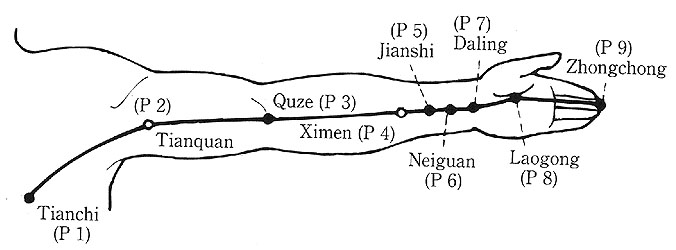
According to this informative article, there are seven key acupressure points that can be stimulated using the fingers to bring about the body's natural self-curative abilities. I learnt that these acupressure points are Zu San Li, Tai Chong, San Yin Jiao, Yang Ling Quan, Nei Guan, Lie Que and He Gu. 

TAI CHONG (Liver 3)

I decided to google some of these acupressure points to find out if there are pictures showing their specific locations in the body, and I find the diagram in this website useful to identify where Tai Chong is and I learnt it is also known as Liver 3. 
 http://acutakehealth.com/why-are-you-doing-that-point-lv3-li4
"Liver 3—also known as Taichong (Chinese name), Great Rushing (English translation) and LV3 (acupuncturist lingo)—is located on the foot, between the first and second toes.
Liver 3 is what’s known as a source point. Every meridian has one. Source points behave sort of like central stations on subway lines. They are hubs where internal and external energies gather and transform. They are single, high-concentration points that grant access to the larger system.
Because Liver 3 has such far-reaching effects, it is indicated for a very wide variety of conditions. John Pirog, in The Practical Application of Meridian Style Acupuncture, says Liver 3 is “probably the most important point for stagnation of the inner body.”
Liver 3 is used for menstrual cramps, headaches, vision problems, coastal-region pain and shortness of breath, low back pain, insomnia, and more. The list truly goes on and on. Feeling stuck? Hello, Liver 3. This point gets things moving.
Liver 3′s extensive effects are palpable. Needling it usually causes a strong achy sensation, either locally at the site of insertion, throughout the entire foot, or sometimes even up into the leg along the Liver meridian."
NEI GUAN

I also find the diagram in this website helpful to locate Nei Guan around the wrist.
 http://www.diyacu.com/self-acupuncture-blog/all-about-the-neiguan-acupuncture-point.html
"Altogether, the Neiguan point is renowned to help to treat and manage:
  • Sickness and nausea
  • Chest and abdominal pains and problems
  • Angina
  • Stomach problems and upsets
  • Inflammation of the pericardium
The Neiguan acupuncture point is a very “balancing” point, which is why it can have a positive effect on a wide range of complaints and conditions that involve relaxing the muscles, such as those in the diaphragm and the chest."

HE GU (Large Intestine 4)

As for He Gu, I learnt that it is also known as LI4 (or Large Intestine 4), which can be stimulated to bring relief to pain and stress. 
"Chinese Name: Hegu (English translation: Joining Valley)
Location:  On the dorsum of the hand, between the 1st and 2nd metacarpal bones, in the middle of the 2nd metacarpal bone on the radial side."

LIE QUE

Lie Que: Relieves sadness, grief and depression. The vibrant magnetic aspect of a woman suffers most from these emotional issues. Poor posture, respiratory problems, and various skin conditions may be prevented with the use of this point. The Lie Que point is located on the thumb side of the wrist, beside the head of the radial bone (just below the base of the thumb) approximately one inch from the crease of the wrist (toward the elbow).

Tuesday, September 10, 2013

Health benefits of dandelion root tea and dandelion greens


I have checked out the article "8 Reasons to Drink Dandelion Root Tea", and I noted it has many health benefits, such as improving digestion, easing congestion of the liver, purifying the bladder and kidneys, reducing risk of urinary tract infections, purifying the blood, regulating blood sugar, improving blood circulation, easing bloating and aching joints, and curing skin conditions, besides containing calcium, magnesium, iron, zinc, potassium, and vitamins B and C.


I also learnt from Adamo's website that dandelion is considered safe for blood type B. The description in the website also says dandelion can add interest to salads. I think I may have eaten dandelions before when I eat salads once in a while.
"The bright green leaves have a slightly bitter, tangy flavor that adds interest to salads. They can also be cooked like spinach. The roots can be eaten as vegetables or roasted and ground to make root "coffee." Though they're available until winter in some states, the best, most tender dandelion greens are found in early spring, before the plant begins to flower. Look for bright-green, tender-crisp leaves; avoid those with yellowed or wilted tips. Refrigerate, tightly wrapped in a plastic bag, up to 5 days. Wash thoroughly before using. Dandelion greens are an excellent source of vitamin A, iron and calcium."
(Source: http://www.dadamo.com/typebase4/depictor5.pl?138)

Monday, August 12, 2013

Insomnia and Anxiety Help

 Chris shares a breathing and affirmation technique to help with insomnia and anxiety.

Intuitive Guidance - Ethical Sites at http://LiveReaders.com

Check out Chris's (pen name, Mystic Life's) book "Spiritual Polyamory" at http://SpiritualPolyamory.com

To see Chris's written works (pen name, Mystic Life) on spiritual and personal growth, visit http://Unification.com
The speaker in the video suggests that we breathe in while thinking of the word "fine", and breathe out while thinking of the word "I'm". He said that by taking in the thought of "fine" with the breath, we are symbolically taking in the feeling of being fine, and we will start to feel better and more relaxed through this breathing and meditation technique.

He added that by repeating "I'm fine" in our thoughts, we are giving ourselves self-affirmation and allowing our mind to focus on this self-affirmation and prevent it from worrying about other things. He says that this breathing practice helps our entire body to function better, and by doing more breathwork in general and returning to the breath, we are oxygenating all the organs in our body, and improving the functions of our entire physical being. This is a good reminder for me to practise breathwork more often as well.

Sunday, August 4, 2013

Psychiatry and Religion

Video information

Thomas Szasz is a psychiatrist and author well known for his criticism of the modern psychiatry movement. He has consistently sought to apply classical liberal principles (such as bodily and mental self ownership) to social science and also explored the consequences of mandatory institutionalization of persons the state deemed to be insane. In his book, The Myth of Mental Illness (1960), Szasz claims that psychiatry ultimately robs people of the responsibility of being moral agents by obscuring the difference between socially unacceptable behavior and disease.

In this lecture, given at the National Libertarian Party's Nominating Convention in 1983, Szasz compares the influence of psychiatry on the public with the influence of religion on the public (usually with the backing of the respective king or government body) during the Middle Ages. Szasz points out that the state's tendency to use science as a justification for trampling the rights of individuals today is much like the state's tendency to use religious justifications to trample the rights of individuals in days past. Szasz once wrote in 1974:

"Since theocracy is the rule of God or its priests, and democracy the rule of the people or of the majority, pharmacracy is therefore the rule of medicine or of doctors."
I have checked out the video in which Thomas Szasz observed how psychiatry is similar to religion in their use, or rather misuse, of power and authority, to abuse, control, manipulate and persecute those who are considered deviant. The addiction to power leads to corruption among the psychiatric authorities that seek to disempower people through mind control, ostracization, stigmatization and drug control. Just as those who are considered deviant by religious authorities are branded as heretics who commit blasphemy, those who are considered likewise by psychiatric authorities are labelled as psychotics who deny reality. Modern psychiatry thus has become a cruel state religion and social control system, as noted in Wikipedia below.

"Psychiatry's main methods are those of conversation or rhetoric, repression, and religion. To the extent that psychiatry presents these problems as "medical diseases," its methods as "medical treatments," and its clients – especially involuntary – as medically ill patients, it embodies a lie and therefore constitutes a fundamental threat to freedom and dignity. Psychiatry, supported by the State through various Mental Health Acts, has become a modern secular state religion according to Szasz. It is a vastly elaborate social control system, using both brute force and subtle indoctrination, which disguises itself under the claims of scientificity."
I also learnt in the website that Szasz "stated that involuntary mental hospitalization is a crime against humanity. Szasz also believed that, if unopposed, involuntary hospitalization will expand into "pharmacratic" dictatorship."

Modern psychiatry to me is an elaborate drug cartel that colludes with the governments and Big Pharma, which deserves to be criminalized for their inhumane and abusive ways against humanity.


Monday, July 29, 2013

Gluten intolerance and alternative food

I noted from this article "10 Signs You're Gluten Intolerant" that people with gluten intolerance need to avoid food containing gluten, which is "a protein found in wheat, rye and barley", otherwise they may develop symptoms such as digestive issues, chronic fatigue, hormonal imbalance, inflammation in joints, and anxiety. One person commented below the article that "Given that wheat, soy and corn are the top food intolerances AND are also the top GMO food crops, I'd say that has something to do with it." 

I learnt from the article that an elimination diet is the best way to determine whether a person has an issue with gluten. As for me, I have been eating bread every day and drink barley water on weekends, and I am monitoring my health at the same time to see if there are symptoms related to gluten intolerance. 

I also learnt in the case of gluten intolerance, a change in diet will be necessary, such as substituting wheat products with pure oats, for example. Eating eggs for breakfast is a healthy gluten-free meal too, which you have been eating. I learnt from this article below that it is recommended to eat 2 or 3 eggs per day, preferably those that are organic and pasture-raised. 
"There’s absolutely no reason to limit your consumption of eggs to three to four per week, as recommended by “heart-healthy” nutritional guidelines. In fact, consuming two to three eggs per day would provide a better boost to your health and protection against disease than a multivitamin supplement. Eggs truly are one of nature’s superfoods." 
 
(From "Three eggs a day keep the doctor away!" by Chris Kresser)

Notes on Inner Qi seminar

Inner Qi seminar Aligning your sub-conscious for health, wealth and happiness - Master CK "Yellow emperor's inner classi...